Compact Vibratory Roller: 5 Signs Your Construction Business Needs One
You finish a job. You test the ground. The density fails. You redo the work. You lose money. This happens more often than you think. The problem is not your crew. The problem is your equipment.
Standard soil compactors have limits. They work fine for small patches. They fail for driveways, parking lots, and road base. A Compact Vibratory Roller fixes these failures.
But how do you know when you need one? Here are 5 signs your business needs a Compact Vibratory Roller. And if you are deciding on equipment sizing, check our guide on compact vs large vibratory rollers.
☰ Table of Contents
Your Density Tests Keep Failing
You pour a gravel base. You run your compactor over it. You bring out the nuclear density gauge. The number comes back low. 90 percent. 91 percent. Your spec requires 95 percent. You run another pass. The number does not move. You run a third pass. Still stuck.
This is a clear sign. Your compactor lacks vibration energy. Static weight alone will not lock granular materials. Gravel needs shaking. Particles need to settle into each other. A Compact Vibratory Roller adds that shaking. One pass gives you 95 to 98 percent density. You pass the test. You move on.
Example: A contractor in Nevada built a storage facility pad. His soil compactor failed three density tests. He rented a Compact Vibratory Roller. One pass gave 96 percent. He passed inspection the same day using his new Compact Vibratory Roller.
Your Operators Complain of Back Pain and Fatigue
Your crew runs a walk-behind compactor for four hours. The next day, someone calls in sick. Back pain. Shoulder pain. Wrist pain. This is not a weakness. This is physics. A static compactor transfers vibration directly to the operator’s hands and spine. Long-term exposure causes real injuries. Carpal tunnel. Herniated discs. Hand-arm vibration syndrome.
A Compact Vibratory Roller isolates the operator. You sit on a suspended seat. You steer with light controls. The machine takes the impact. You finish fresh.
One site supervisor told me his turnover rate dropped by half after switching to a Compact Vibratory Roller. Operators stopped quitting. They showed up everyday because the Compact Vibratory Roller did the hard work.
Your Edges and Corners Look Uneven
Look at your finished slab or asphalt edge. Do you see dips? Do you see waves? Do you see a soft zone next to the curb? Standard compactors miss edges. They leave a 6-inch gap near forms. Your crew then hand-tamps those gaps. Hand tamping never achieves the same density. Differential settling follows. Cracks appear. Clients get angry.
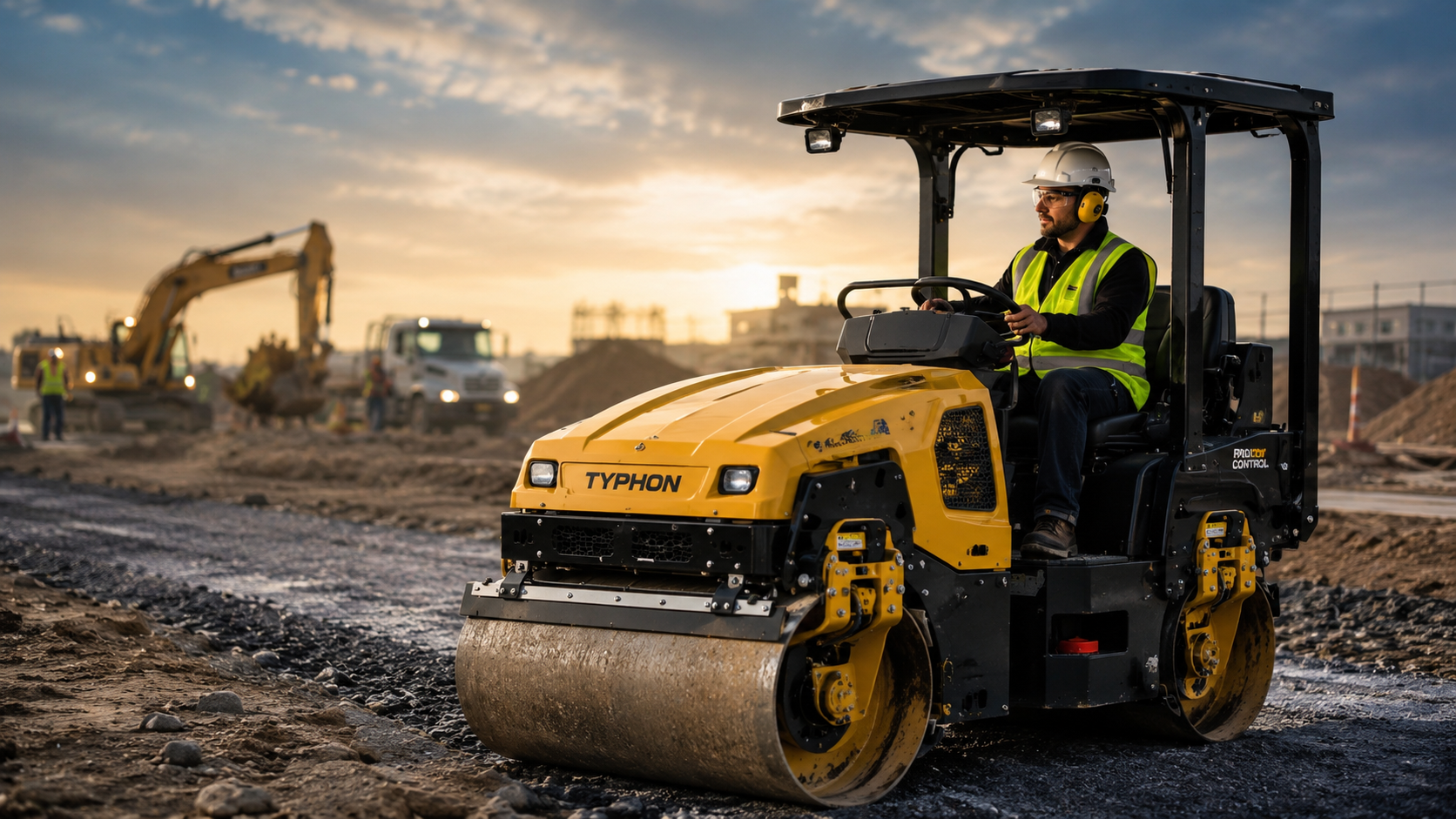
A Compact Vibratory Roller has a narrower drum. Some models measure 20 inches wide. You roll within 1 inch of a curb or wall. No hand tamping needed. Full density edge to edge.
For asphalt patches, having a Compact Vibratory Roller is critical. Poor edge compaction leads to raveling. The patch falls apart in one winter. You get a chargeback. You lose the client. The precision of a Compact Vibratory Roller solves this.
Your Fuel Bills Keep Going Up
You check your monthly fuel spend. It climbed 20 percent year over year. Your job count stayed the same. Your rates stayed the same. The difference is machine hours. A standard soil compactor runs longer per square foot. More hours mean more fuel. More fuel means less profit.
A Compact Vibratory Roller finishes faster. You cover the same area in one-third the time. Less run time equals less fuel. Do the math. Your compactor uses 0.9 gallons per hour. You run it 40 hours a week. That is 36 gallons. At 4 dollars per gallon, you spend 144 dollars per week just on fuel.
A Compact Vibratory Roller uses 0.6 gallons per hour. You run the Compact Vibratory Roller 25 hours a week for the same output. That is 15 gallons. Your weekly fuel cost drops to 60 dollars. You save 84 dollars per week. Over a year, operating a Compact Vibratory Roller saves 4,368 dollars.
You Keep Losing Bids to Competitors
You bid on a residential driveway. You lose. You bid on a small parking lot. You lose. You bid on a trench backfill job. You lose again. Your competitors bid lower. They finish faster. They have lower hourly rates because their equipment is more efficient.
A Compact Vibratory Roller gives you that efficiency. You complete jobs in less time. You use less fuel. You pay less labor. You bid lower. You win more work.
One contractor in Ohio told me he lost 12 bids in one season. He bought a Compact Vibratory Roller. His production rate doubled. He bid 15 percent lower on the next 10 jobs. He won 7 of them. He paid off his Compact Vibratory Roller in 9 months.
What to Do Next
You see one or more of these signs. You need a Compact Vibratory Roller. Do not buy one yet. Rent first. Call your local rental location.
Rent a Compact Vibratory Roller for one week. Run it on your next two jobs. Track your density results. Track your finish quality. Track your fuel use. Compare those numbers to your current Compactor. The difference will be clear.
How to Choose the Right Model
If you decide to buy a Compact Vibratory Roller, look for three features. First, drum width. 24 inches works for most driveways and pads. Second, variable frequency. Third, a water spray system for asphalt work.
A site foreman in Texas kept records before and after switching to a Compact Vibratory Roller. His average density test went from 91 percent to 96 percent. His finish time dropped from 3 hours to 1 hour. He bought the roller for 18,000 dollars. It paid for itself in 10 months.
Do Not Wait for a Failure
You do not need a major project failure to make a change. Watch for these 5 signs. Rent a Compact Vibratory Roller next week. Test it on one job. Compare the results. You will see the difference yourself. Then you will never go back to a static compactor.
Stop losing time and money to inefficient equipment. Upgrade your job site capability with top-tier construction machinery.
View Equipment Details Now