Why Smart Contractors are Now Switching from Soil Compactors to Vibratory Rollers 5 Reasons
You run a crew. You have a deadline. You need compacted ground. Most guys grab standard Soil Compactors. The old walk behind. The heavy thumper. Smart contractors grab a compact vibratory roller instead. This is not hype. This is a real upgrade. You get faster work. Better density. Lower costs. Fewer repairs.
Here are 5 reasons American contractors make the switch.
☰ Table of Contents
You Hit Density in Half the Passes
Standard Soil Compactors use static weight. It pushes down. That works for loose topsoil on a residential lot. It fails on gravel or base rock. A vibratory roller adds high-frequency impacts. Each impact shakes particles into a tighter formation. You lock the ground fast.
Real numbers. One pass with a vibratory roller equals three or four passes with standard Soil Compactors. You cut machine time by 70 percent. On a 2,000 square foot pad, you save two hours of fuel and labor.
Your compaction tests prove the difference. Standard Soil Compactors stop at 90 to 92 percent modified Proctor density. A vibratory roller gets you to 95 to 98 percent. That difference stops future settling. No callbacks. No angry homeowners. No lawyer letters.
You Work Tight Spaces Without Damage
Traditional Soil Compactors need room. They need space to turn. They leave marks on the edges. They push material outside your forms.
Unlike basic Soil Compactors, vibratory rollers fit where others do not. Compact models have drums as narrow as 18 inches. You work next to the curbs. You compact inside trenches. You roll against retaining walls. You do not scrape or gouge. American contractors love this for driveway base compaction.
Standard Soil Compactors shove gravel into the lawn. The homeowner gets mad. You get a chargeback. A vibratory roller stays on the gravel. You protect the landscape. You also protect underground utilities. Less vibration spreads sideways. More energy goes straight down. For PVC pipe bedding, this is critical. You compact over the line without cracking it. Your trench passes inspection on the first try.
Soil Compactors: Why Smart Contractors Are Switching — Old habits fade when precision, job speed, and better performance become the clear priority on American job sites.
You Save Money on Fuel and Labor
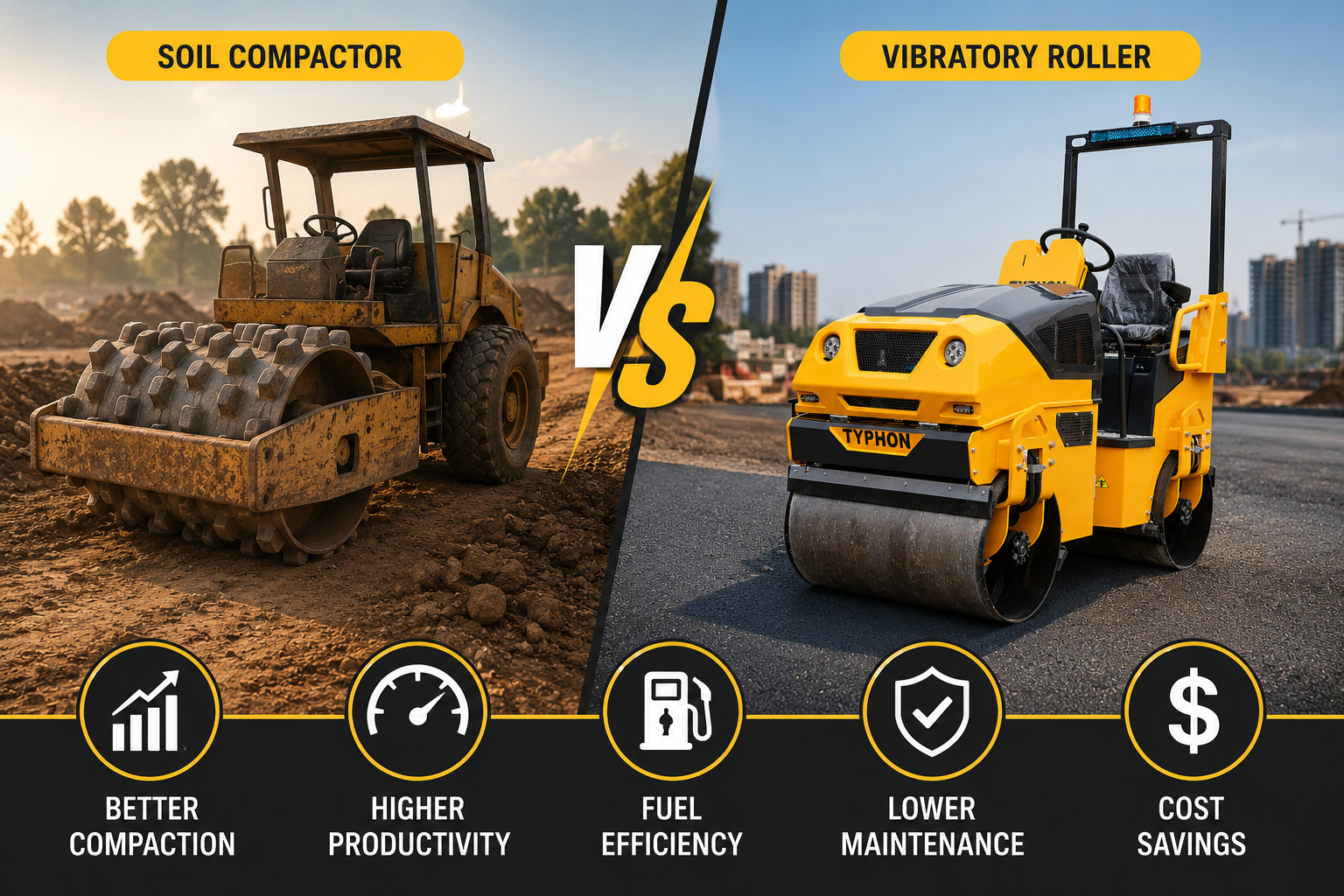
Fuel burns every minute your machine runs. Labor costs every hour your crew waits. A vibratory roller finishes the job faster. Simple math. Less run time means less fuel. Less run time means your crew moves to the next task sooner.
Do your own calculation. Standard Soil Compactors use 0.8 to 1.0 gallons of diesel per hour. Compared to older Soil Compactors, a compact vibratory roller uses 0.5 to 0.6 gallons for the same output. That is 30 to 40 percent less fuel.
Now add labor. Your crew rate is 150 dollars per hour. Saving two hours saves 300 dollars. Do that on ten sites per month. You save 3,000 dollars. That money buys new tools. Or a crew lunch. Or stays in your pocket. Replacing bulky Soil Compactors also reduces wear. Fewer passes mean fewer hours on the machine. Fewer hours mean fewer oil changes, hydraulic filter changes, and drum replacements.
You Control Asphalt and Base Layers Better
Soil Compactors work fine on dirt. They fail on asphalt. They fail on an aggregate basis. They bounce. They leave washboard patterns. Your finish looks like garbage.
A contractor in Texas told me his crew resurfaced a strip mall parking lot. They used typical Soil Compactors first. The surface looked like ocean waves. They spent four hours grinding it down. Next job he used a vibratory roller. One smooth pass Done. The property owner shook his hand.
Because heavy Soil Compactors lack frequency adjustments, they struggle. Vibratory rollers run smoothly. You control the frequency. You match it to the material. For asphalt, you use high frequency and low amplitude. For base rock, you use low frequency and high amplitude. This control gives you a flat finished surface. No bumps. No wave marks. No pickup on the drum.
You Reduce Operator Fatigue and Mistakes
A guy runs typical Soil Compactors for six hours. His back hurts. His arms ache. His attention drops. He misses edges. He overlaps poorly. He compacts too long in one spot.
A vibratory roller is easier to handle than jerky Soil Compactors. The vibration works for you. You do not push or pull hard. You steer. The machine does the work. Unlike old Soil Compactors, lower fatigue means fewer mistakes. Your operator stays sharp. He covers the whole area once. He watches the drum. He checks the edge.
Safety also improves. Vibratory rollers have better visibility. You see the drum contact point. You see people near the machine. You avoid backing accidents. OSHA likes that. One site manager in Florida told me his accident report dropped by 80 percent after switching to vibratory rollers. Operators stayed fresh. They did not rush. They did not take dangerous shortcuts.
Which Vibratory Roller Should You Buy?
Get a machine that fits your work. To replace your fleet of Soil Compactors, look for three things.
- First, drum width. For pavement and asphalt, use a 24 to 30-inch drum. For trenches and tight spaces, use a 20-inch drum.
- Second, vibration frequency. Get variable frequency. You need 40 to 60 hertz. Lower for thick base rock. Higher for thin asphalt lifts.
- Third, the water system. Asphalt work needs a water spray to prevent pickup. Look for dual spray bars with strainers.
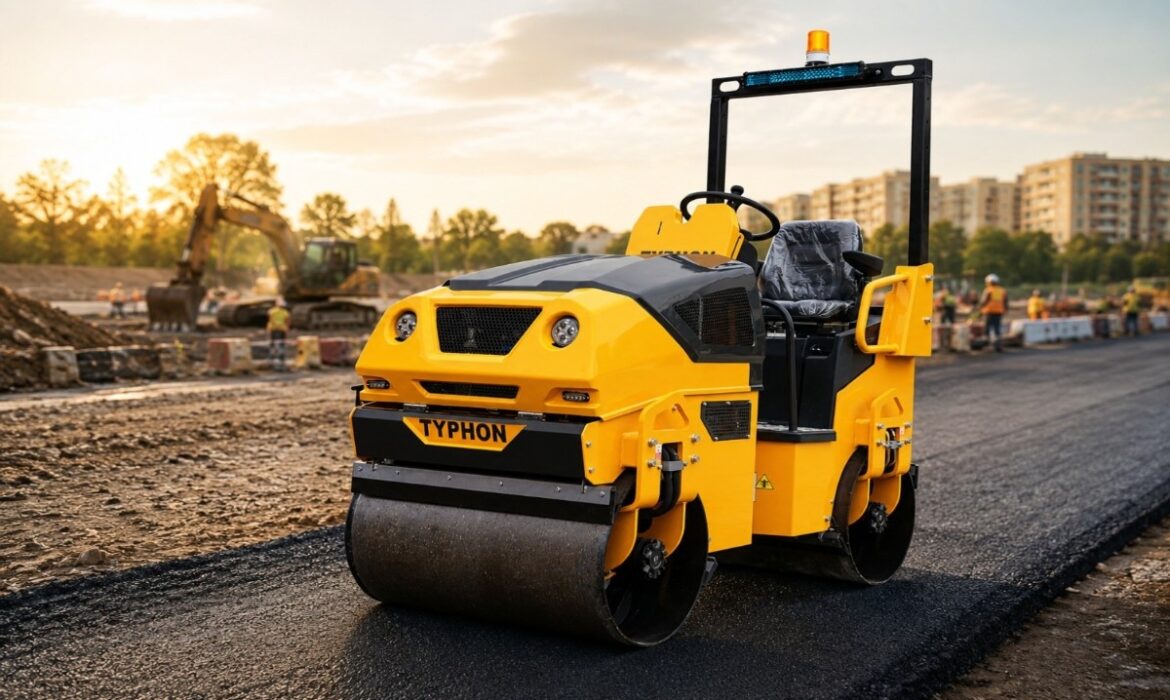
Top brands in the American market include Wacker Neuson, Ammann, Bomag, Kubota, and Typhon. If you are ready to replace old Soil Compactors, buy the one with reliable local parts support. For example, upgrading to a TYPHON Fury 1 Ton Compactor provides excellent long-term value.
One Contractor’s Real Numbers
I spoke to a site supervisor in Phoenix. He ran three Soil Compactors for two years. He switched to two vibratory rollers. Here are his numbers:
Fuel cost dropped from 360 dollars per week to 240 dollars per week. Labor hours dropped from 40 hours per week to 24 hours per week. The inefficiencies of his previous Soil Compactors were hurting his bottom line, but now, rework due to soft spots dropped from three times per month to zero.
He paid for each roller in seven months. Now he saves 600 dollars per month. He bids lower. He wins more jobs. His clients trust him.
How to Make the Switch
Start with one machine. Rent a compact vibratory roller for one week from a local yard. Run it alongside your current Soil Compactors. Measure the difference. Track your time per square foot. Track your fuel use. Track your test results. Track your operator feedback.
If you want a deeper look at business factors, read the 5 signs your business needs a compact vibratory roller instead of relying on outdated Soil Compactors.
Final Step
Call your local equipment dealer. Ask for a demo. Bring your own material. Bring your own operator. Test on your own site. Do not trust a brochure. Trust your own stopwatch. Trust your own density gauge. Trust your own back.
The switch from traditional Soil Compactors makes sense. It saves money. It saves time. It saves your crew. And it delivers better work. That is why smart contractors switch. Now you know the reasons. Go test one yourself.
Get reliable, job-ready ground compaction tools designed for today’s fast-paced contract work.
Explore The Latest Equipment