Compact Roller Steering Radius 2026: 8 Feet vs 7.5 Feet in Tight Spaces
You work in tight spaces. You compact around fire hydrants. You compact next to curbs. You compact in parking lot corners. You compact between trees. Your roller needs to turn. The tighter the turn, the less you reverse. The less you reverse, the faster you finish.
When evaluating your compact roller steering radius 2026 needs, you must consider tight spaces. Steering radius matters more than you think. Half a foot difference changes your jobsite time. Half a foot difference saves you from hitting obstacles. Half a foot difference reduces operator stress.
Just like you evaluate the compact roller fuel type 2026, choosing the right compact roller steering radius 2026 setup is vital. I talked to contractors who work in cities, residential areas, and rental yards. They all care about steering radius. They all have stories about tight spots.
☰ Table of Contents
- What Compact Roller Steering Radius 2026 Actually Means
- How Steering Works on Compact Rollers
- Real Jobsite Challenges in Tight Spaces
- Drum Width and Steering Relationship
- Operator Skill
- Compact Roller Steering Radius 2026 and Compaction Coverage
- Reversing Time and Productivity
- Obstacle Clearance
- Jobsites with Limited Access
- Residential Driveway Jobs
- Commercial Parking Lot Jobs
- Industrial Site Jobs
- Soil Disturbance
- Operator Fatigue
- Which Compact Roller Steering Radius 2026 for Your Jobsites
What Compact Roller Steering Radius 2026 Actually Means
Understanding your compact roller steering radius 2026 specifications is critical. Steering radius is the smallest circle your roller can turn. It is measured from the center of the turn to the outside edge of the drum. A smaller number means a tighter turn.
An 8 foot radius means your roller needs a 16 foot diameter circle to turn around. A 7.5 foot radius means your roller needs a 15 foot diameter circle. That is 1 foot less space. On paper, the difference seems small. On a jobsite, that 1 foot saves you one reverse maneuver. One reverse maneuver takes 15 seconds. Over a full day, those seconds add up to minutes. Minutes add up to hours.
How Steering Works on Compact Rollers
Evaluating your compact roller steering radius 2026 options requires knowing the mechanics. Two steering systems exist on compact rollers: Articulated steering and hydraulic steering.
Articulated steering uses a pivot point between the front and rear frames. The entire machine bends in the middle. The drum follows the rear frame. This system gives a tighter turning radius. It is common on larger rollers.
Hydraulic steering uses cylinders to turn the front drum directly. The rear frame stays straight. The drum pivots left or right. This system gives precise control near edges. It is common on smaller rollers. Both systems have advantages. Articulated steering turns tighter. Hydraulic steering turns more precisely.
Real Jobsite Challenges in Tight Spaces
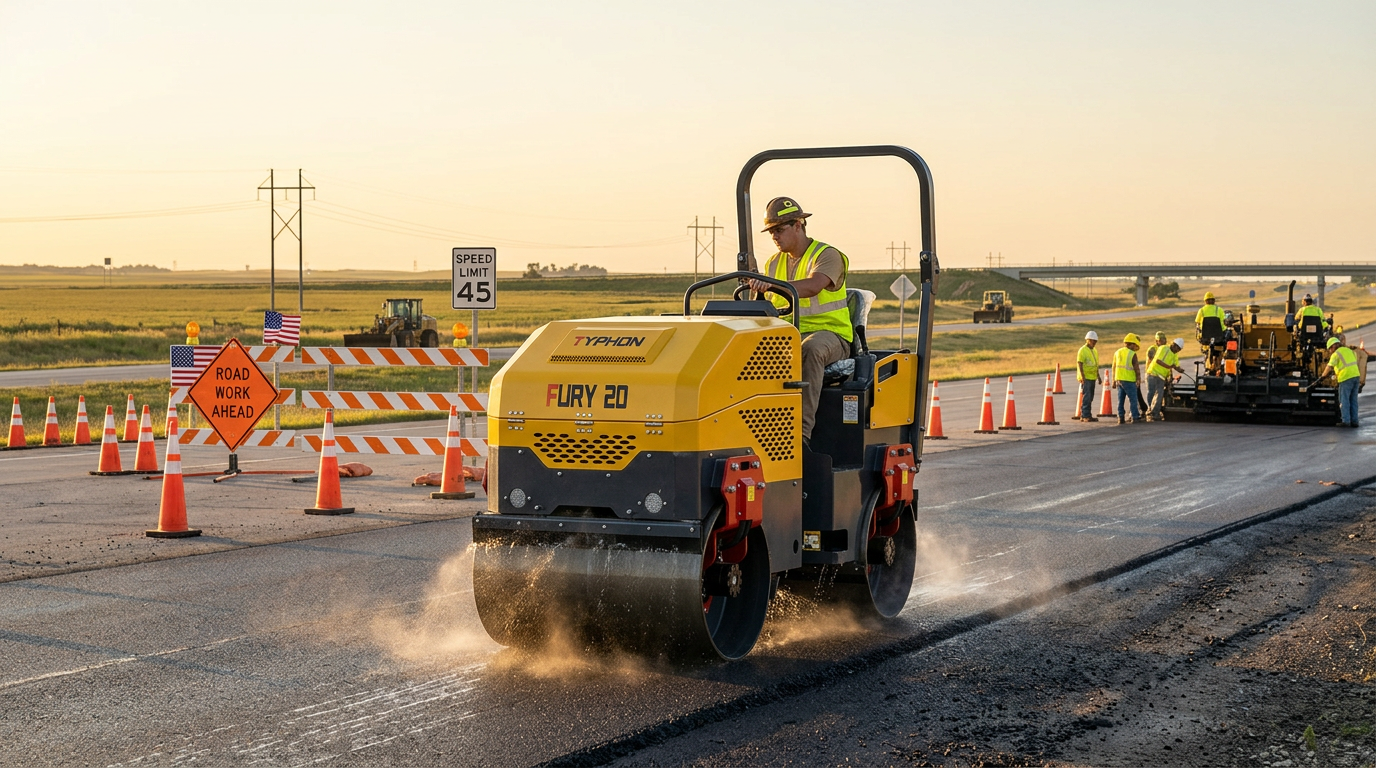
Let’s look at how compact roller steering radius 2026 challenges play out on real jobs. A contractor in Chicago works on alleyways. Alleys are 10 feet wide. He uses a roller with a 7.5 foot radius. He turns at the end of the alley without reversing. He finishes the alley in 20 minutes. He tried an 8 foot radius roller once. He had to reverse 4 times at each end. The job took 35 minutes.
A contractor in New York works on sidewalk repairs. Sidewalks are 5 feet wide. He uses a roller with a 7.5 foot radius. He turns into the next street without hitting the building. The 8 foot radius roller would hit the wall. He would need to reverse and reposition. A contractor in San Francisco works on driveways with tight corners. Driveways are 8 feet wide. He uses an 8 foot radius roller. He reverses once at each corner. He said the 7.5 foot roller would save one reverse per corner. But his current roller works fine.
Drum Width and Compact Roller Steering Radius 2026 Relationship
The compact roller steering radius 2026 relationship with drum width is highly important. Drum width affects steering radius. A wider drum needs more space to turn. A narrower drum turns tighter.
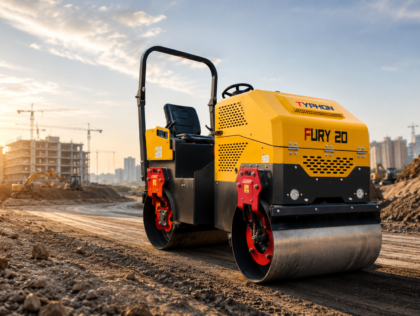
A 34 inch drum with an 8 foot radius needs more space than a 31 inch drum with the same radius. The outside edge of the wide drum swings wider. When measuring compact roller steering radius 2026 metrics, the TYPHON Fury 20 has a 34 inch drum and 8 foot radius. Some competitors have a 31.5 inch drum and 7.5 foot radius. The combination of narrower drum and tighter radius gives better maneuverability. But wider drums reduce passes. You trade turning ability for coverage. Choose based on your jobsite.
Operator Skill and Compact Roller Steering Radius 2026
Operator skill and your compact roller steering radius 2026 go hand in hand. Skilled operators handle any radius. They anticipate the turn. They start the turn early. They use the machine’s momentum. New operators struggle with wider radius. They misjudge the turn. They hit curbs. They damage the drum.
A rental yard owner in Florida said his customers prefer 7.5 foot radius rollers. They make fewer mistakes. They damage equipment less. His repair costs dropped 15% after he switched to tighter radius rollers.
Compact Roller Steering Radius 2026 and Compaction Coverage
Optimizing your compact roller steering radius 2026 means you cover more area per pass. Tighter radius means you do not miss corners. You do not leave uncompacted spots.
A contractor in Texas tested both radii on a parking lot. He used the 7.5 foot radius roller first. He covered the lot in 3 passes. He used the 8 foot radius roller second. He covered the lot in 4 passes. The tighter radius saved him one pass per section.
Reversing Time and Productivity
Reversing takes time. You stop forward motion. You shift the controls. You look behind you. You move backward. You stop again. You shift forward. This process takes 15 to 30 seconds.
A wider compact roller steering radius 2026 standard forces more reversing. If a wider radius roller needs 4 reversals per section, you lose 1 minute per section. On a jobsite with 20 sections, you lose 20 minutes. Over a week, you lose 100 minutes. Over a year, you lose 4,000 minutes. That is 67 hours of lost productivity. A contractor in Ohio calculated his reversing time. He used an 8 foot radius roller on a 50,000 square foot lot. He reversed 50 times. Each reverse took 20 seconds. Total time lost was 1,000 seconds. That is 17 minutes. He said the 7.5 foot roller would have saved him 10 minutes on that job.
Obstacle Clearance and Steering Radius
Obstacles are everywhere. Fire hydrants. Light poles. Sign posts. Mailboxes. Trees. You need to steer around them without hitting them. With the right compact roller steering radius 2026 capabilities, obstacles are easier to dodge.
A wider radius roller needs more space to clear an obstacle. You start the turn earlier. You cut the wheel harder. You risk hitting the obstacle with the rear frame. A tighter compact roller steering radius 2026 model clears obstacles easily. You turn at the last moment. You avoid the obstacle with room to spare. A contractor in Pennsylvania works on residential streets. He said the 7.5 foot radius roller saves him from hitting mailboxes. The 8 foot radius roller always comes close.
Jobsites with Limited Access
Some jobsites have limited access where your compact roller steering radius 2026 decides your success. You enter through a gate. The gate is 8 feet wide. You turn immediately after the gate. Your roller needs to fit through the gate and turn without reversing.
An 8 foot radius roller cannot turn immediately after an 8 foot gate. You need to drive straight for 8 feet, then turn. If the jobsite does not have that space, you reverse. A 7.5 foot radius roller turns immediately after the gate. You drive through, turn, and start compacting. No reverse. No time lost.
Residential Driveway Jobs
For residential driveways, compact roller steering radius 2026 is the most important spec. Residential driveways are narrow. They are 8 to 10 feet wide. You drive up the driveway. You compact the surface. You need to turn around at the top.
A 7.5 foot radius roller turns around on a 10 foot driveway. You do not touch the grass. You do not touch the garage. An 8 foot radius roller needs a 12 foot driveway. If the driveway is 10 feet, you reverse. You back down the driveway. You drive forward again. This adds time. This adds risk. You might hit the garage door.
Commercial and Industrial Jobs
Parking lots demand a precise compact roller steering radius 2026 approach. Parking lots have parking spaces. Parking spaces are 9 feet wide. You compact between the lines. You turn at the end of each row. A 7.5 foot radius roller turns within the parking space. You do not hit the cars. You do not hit the curbs. An 8 foot radius roller needs more space. You might hit the curb. You might hit the car.
Soil Disturbance
The right compact roller steering radius 2026 prevents surface scuffing. Tighter radius rollers disturb less soil. The drum does not scuff the surface during turns. The machine does not create ruts.
Wider radius rollers scuff more. The drum drags during the turn. The surface gets damaged. You need to recompact the scuffed area. A contractor in Georgia works on golf cart paths. He uses a 7.5 foot radius roller. He turns without scuffing. The path surface stays smooth.
Which Compact Roller Steering Radius 2026 for Your Jobsites
When making your compact roller steering radius 2026 decision, choose 7.5 foot if you work in cities. Choose 7.5 foot for residential driveways and tight parking lots.
Choose 8 foot radius if you work on open sites, road jobs, or if you need wider drums. Test both radii if possible. Rent a 7.5 foot roller for one job. Rent an 8 foot roller for another job. Compare time. Compare fatigue. Compare results.
Real Contractor Experiences
Real contractor feedback on compact roller steering radius 2026 highlights the difference. A contractor in Boston works on sidewalk repairs. He uses a 7.5 foot radius roller. He said it turns in the 6 foot wide sidewalk. He never reverses. He finishes jobs faster.
A contractor in Los Angeles works on parking garages. Garage columns are close together. He uses a 7.5 foot radius roller. He said it fits between columns. He compacts tight spots without hand work. A contractor in rural Iowa works on farm roads. He uses an 8 foot radius roller. He has plenty of space. He does not need tight turns.
Stop wasting time reversing on every tight corner. Maximize your jobsite agility and drastically cut down operator fatigue with a machine built for tight spaces.
View the TYPHON Fury 1.5 Ton Roller