
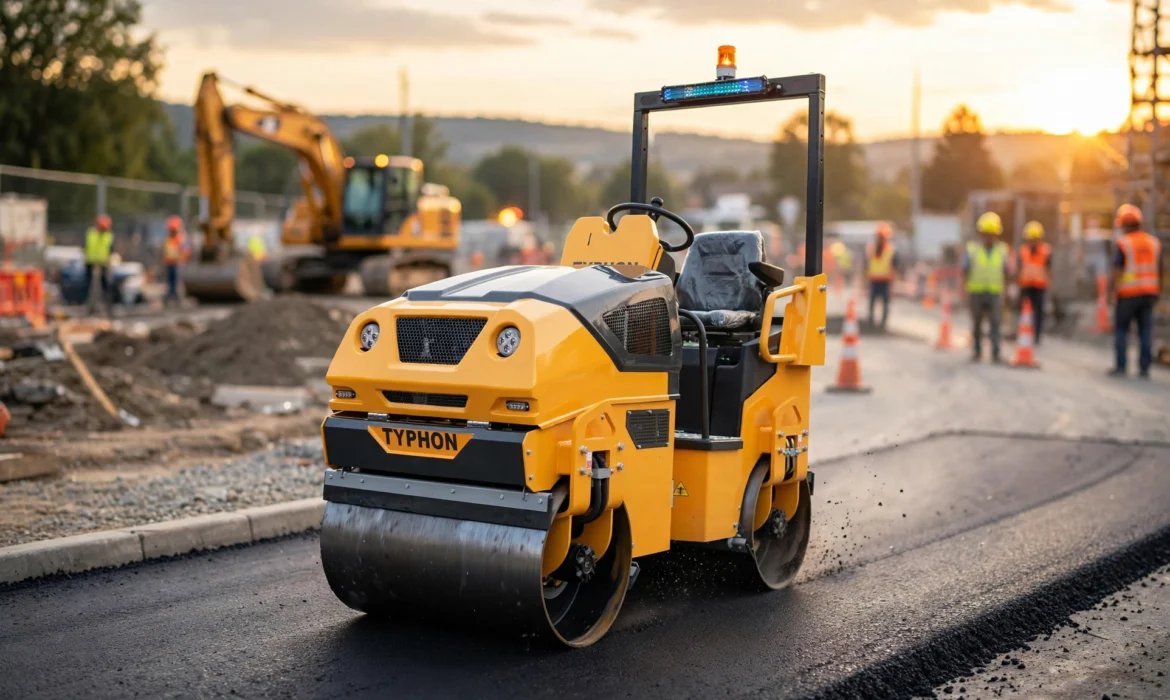
Poor Road Compaction: 5 Costly Failures That Destroy Pavement Life
You drive on a road that looks perfect. Smooth surface. Clean finish. No visible cracks. The contractor hands it over. Everyone celebrates. Then within months, problems start. Cracks appear. Ruts form. Potholes develop. The road fails early.
What went wrong? The answer is simple. Poor road compaction. The compaction was not done correctly during construction. The problems caused by poor road compaction were hidden beneath the surface from day one.
Compaction is the backbone of pavement performance. Without proper compaction, the entire road system begins to fail, sometimes within months of completion. This guide covers 5 costly failures caused by poor road compaction. You will understand why compaction matters and how to avoid these problems before deciding on a single drum vs double drum roller.
☰ Table of Contents
- Failure 1: Cracking and Fatigue Linked to Poor Road Compaction
- Failure 2: Rutting and Plastic Deformation
- Failure 3: Potholes and Surface Disintegration
- Failure 4: Uneven Settlement and Poor Road Compaction
- Failure 5: Premature Failure and High Costs
- How to Prevent Poor Road Compaction
- What to Do If Poor Road Compaction is Discovered
- The Financial Impact of Poor Road Compaction
Failure 1: Cracking and Fatigue Failure
Cracking is the first visible sign of poor road compaction. It starts small. Then it spreads. The technical cause is simple. Inadequate compaction leaves excess air voids in the pavement. These voids allow load induced tensile stresses to exceed the materials strength. The pavement cannot handle the traffic weight.
The result is fatigue cracking. Also called alligator cracking. The cracks form a pattern that looks like reptile skin. They start at the bottom of the pavement. They work their way to the surface. By the time you see them, the damage is already severe.
Industry standards require a minimum density for base layers. The target is typically 95 percent of maximum dry density. When compaction is poor, density drops below this number. The air voids remain. The pavement weakens. Cracking begins.
I talked to a contractor in Texas. He worked on a highway project. The subgrade compaction was rushed. They missed the target density by 3 percent. Within 8 months, the surface showed alligator cracking. The road had to be milled and repaved. Cost overrun was $200,000. Poor road compaction creates hidden voids. The voids become stress points. Traffic loads concentrate on these points. The asphalt fails. Cracks develop. The road deteriorates faster.
Failure 2: Rutting and Plastic Deformation
Rutting is another common failure. You see it as wheel track depressions on the road surface. The pavement sags under traffic. The ruts hold water. They create safety hazards. They reduce ride quality.
The technical cause is high moisture content combined with insufficient density. When the subgrade has too much water, the shear strength drops. The soil cannot support the traffic load. The wheels push the pavement down. Permanent deformations develop.
Testing indicators help identify this risk. The California Bearing Ratio is one measure. A CBR below 8 percent for subgrade indicates high risk of rutting. This happens when poor road compaction occurs and moisture control is lacking. Poor road compaction during subgrade preparation allows water to remain in the soil. The soil stays soft. The pavement sits on a weak foundation. Trucks and cars compress the surface. Ruts form. The road fails.
A contractor in Florida had this problem. He compacted a subgrade for a parking lot. The moisture content was too high. He did not test it. He laid the asphalt on top. Within 6 months, the parking lot had 2 inch deep ruts. He had to remove the entire surface and redo the subgrade. Rutting is expensive to fix. You cannot patch it. You have to remove the damaged area and start over. The cost is high. The downtime is longer.
Failure 3: Potholes and Surface Disintegration
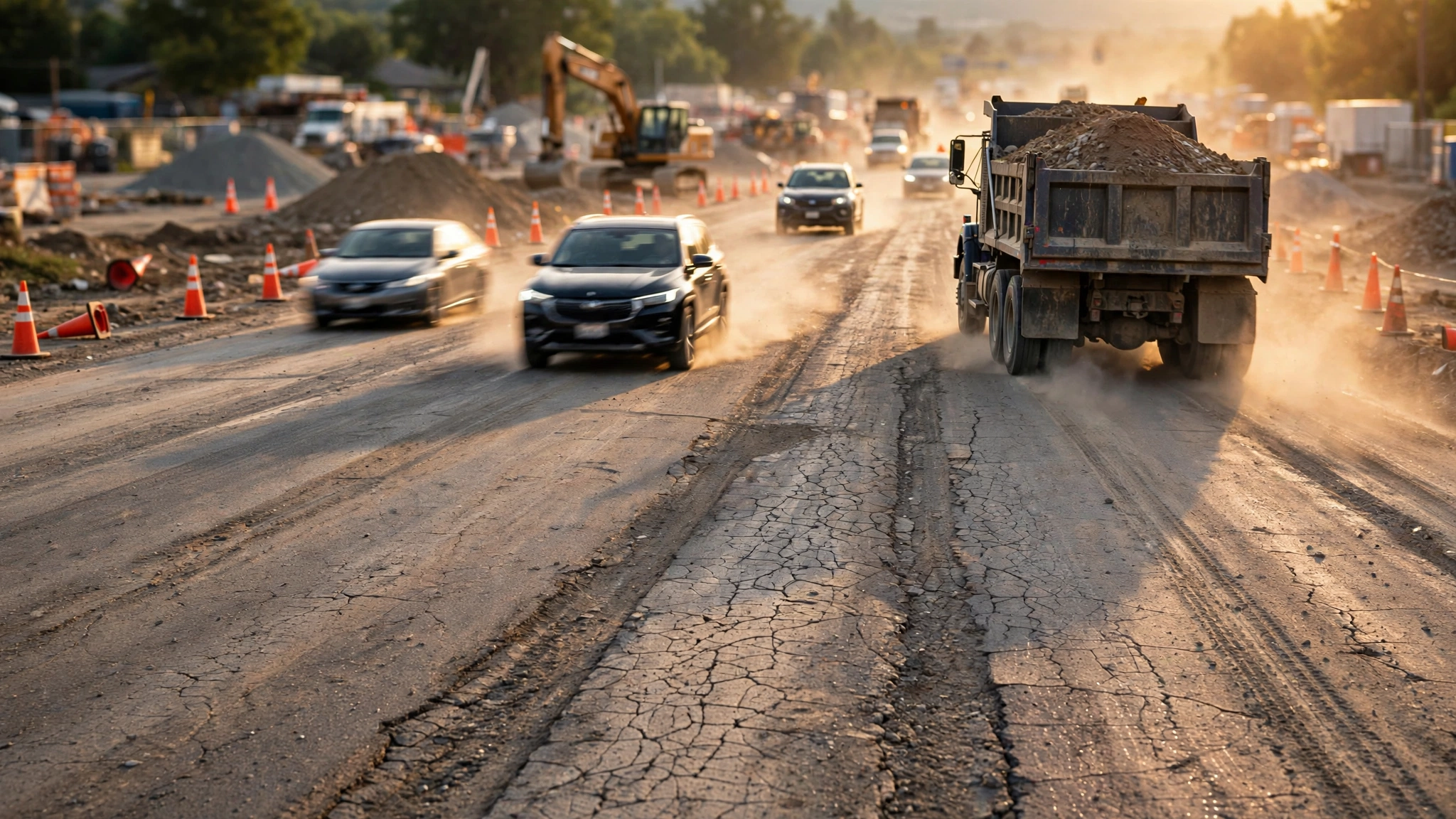
Potholes are the most visible failure. Everyone knows them. They are dangerous. They damage vehicles. They cause accidents. They are a sign of deeper problems caused by poor road compaction.
The technical cause of potholes is poor bonding between pavement layers. This happens when compaction is inadequate. Loose particles remain between layers. Trapped moisture gets in. The bond between layers is weak. Water infiltrates through microcracks. It weakens the subgrade. The pavement loses support. Traffic pounds the surface. The asphalt breaks away. A pothole forms.
Proper compaction ensures adequate dry density and moisture control. It creates a uniform structure. It bonds layers together. It prevents water infiltration. A study in Ghana found that inadequate compaction is a major cause of road failure in tropical regions. The researchers emphasized the need for strict compaction control. Without it, design life is not achieved. Maintenance costs skyrocket.
Poor road compaction leads to potholes that appear within months of construction. India has seen potholes on newly built expressways. The problem is often execution, not materials. The subgrade or base is not compacted properly. The roadbed remains weak. Under heavy traffic, the pavement flexes. Fatigue cracks appear. Water enters. The foundation softens. Potholes form.
Failure 4: Uneven Settlement and Differential Compaction
Have you ever driven on a road that feels bumpy? The surface goes up and down. It is not smooth. This is uneven settlement. It is caused by differential compaction due to poor road compaction techniques.
The technical cause is variations in roller passes or moisture gradients. Some sections are compacted more than others. Some sections have different moisture content. The density varies across the pavement width. When density varies, the ground settles at different rates. One section sinks more than the other. The surface becomes uneven. Ride quality suffers. The road becomes uncomfortable. It is unsafe at high speeds.
Inadequate compaction of subgrade and base materials leads to significant settlement problems. If the soil is not compacted enough, the weight of the pavement and traffic compresses it. The pavement settles. The road becomes uneven.
A contractor in Ohio worked on a residential street. He did not compact the subgrade evenly. One side was denser than the other. After 1 year, the street developed a dip on one side. Water pooled in the low spot. The road had to be repaved. Poor road compaction is often the cause of this differential settlement. It is preventable. Proper roller selection and pass counting eliminate this problem. Testing ensures uniformity.
Failure 5: Premature Failure and High Maintenance Costs
All four failures above lead to the same outcome. Premature road failure. The road does not reach its design life. It fails early. Maintenance costs multiply due to poor road compaction.
The economic impact is severe. A properly compacted road lasts 15 to 20 years. A road with poor road compaction fails in 3 to 5 years. The replacement cost is millions per mile. Maintenance costs are the biggest expense. Pothole patching. Crack sealing. Surface milling. Full depth repairs. These costs add up quickly. Municipalities spend millions on road maintenance. Poor road compaction is a major reason why.
A study on tropical roads found that poor compaction reduced pavement life by 40 percent. The roads failed in 6 years instead of 10. Maintenance costs doubled. The economic loss was significant. Poor compaction also causes indirect costs. Traffic delays from road repairs. Vehicle damage from potholes. Accidents from uneven surfaces. These costs affect everyone. They are avoidable with proper compaction.
A contractor in California told me about a road project he inherited. The previous contractor did poor compaction. The road failed in 3 years. He had to remove 2 miles of pavement. The cost was $1.5 million. All because of poor compaction during the original construction.
How to Prevent Poor Road Compaction
Preventing poor road compaction is simple. Follow the standards. Do not rush the work. Test the material. Use the right equipment.
- Set the right moisture content: Soil needs optimal moisture for compaction. Too dry, it does not bind. Too wet, it becomes mud. Test the soil. Add water if needed. Let it dry if too wet.
- Use the right roller: Single drum rollers work on soil. Double drum rollers work on asphalt. Choose the right size. Rollers that are too light do not achieve density. Rollers that are too heavy crush the material.
- Make enough passes: One pass is never enough. The standard is 4 to 6 passes. Count your passes. Do not guess. Mark the sections. Keep records.
- Test compaction as you work: Use a nuclear density gauge. Use a sand cone test. Do not wait until the end. Test during the process. Fix problems immediately.
What to Do If Poor Road Compaction Is Discovered
If you discover poor road compaction after paving, you have limited options. Thin overlays hide the problem temporarily. Full depth repair is the only long term solution.
Remove the failed section. Excavate to the subgrade. Recompact properly. Repave the surface. This is expensive but necessary. Do not try to simply patch poor road compaction. Patching does not fix the underlying problem. The new patch will fail next to the old weak area.
The Financial Impact of Poor Road Compaction
A 1 mile road costs $1 to $3 million to build. If it fails in 5 years due to poor road compaction, the cost per year is $200,000 to $600,000. A properly compacted road lasts 20 years. The cost per year is $50,000 to $150,000.
Poor road compaction costs you money. It costs your clients money. It costs taxpayers money. It is the most expensive mistake in road construction.
Stop risking your reputation and budget on failed pavements. Invest in high-performance equipment that guarantees structural integrity from the subgrade to the surface.
View the TYPHON Fury 1 Ton Roller