How to Choose the Best Vibratory Roller for 2026: 5 Critical Features to Check
You are buying a vibratory roller in 2026. The market has changed. New emissions rules affect engines. New brands have entered the US market. Old brands have shifted production overseas. Knowing how to choose the best vibratory roller for 2026 is essential. You need to know exactly what to check before you buy.
This guide covers 5 critical features. Each feature affects your jobsite performance. Each feature affects your total cost of ownership. If you are wondering how to choose the best vibratory roller for 2026, use this checklist when you compare rollers.
☰ Table of Contents
- Feature 1: Engine Source and Type
- Feature 2: Drum Thickness
- Feature 3: Water Tank Capacity
- Feature 4: Steering System
- Feature 5: Maintenance Access
- How These Features Affect Your Bottom Line
- The TYPHON FURY 20 Meets All 5 Critical Features
- What to Avoid in 2026
- Real Contractor Experiences
- How to Test These Features Before Buying
- Final Checklist for Buying
Feature 1: Engine Source and Type
The engine is the heart of your roller. It determines reliability. It determines repair costs. It determines resale value. In 2026, you have three engine options. USA built engines. Japanese engines built overseas. Chinese engines.
USA built engines last longer. Data from repair shops shows USA built engines have a 7 percent failure rate in the first 200 hours. Chinese engines have a 22 percent failure rate. USA built engines average 1,800 hours before major repair. Chinese engines average 700 hours. Parts availability is another factor. USA built engine parts are available at any hardware store. Chinese engine parts require special orders. Wait times are 2 to 6 weeks.
When deciding how to choose the best vibratory roller for 2026, look for a USA built engine. Briggs and Stratton and Kohler still produce USA built units. TYPHON FURY rollers use Briggs and Stratton USA built engines. Check the engine stamp. Look for “Made in USA”. Confirm the model number. Ask the dealer for written proof.
Feature 2: Drum Thickness
Drum thickness determines how long your drum lasts on rocky soil. Thicker drums resist dents and cracks. Thinner drums fail sooner. Standard drum thickness on 2 ton rollers is 18 mm. Some rollers offer 20 mm drums. The extra 2 mm adds 50 percent more life on rocky jobsites.
Reshelling a drum costs $1,500 to $2,500. Your roller sits idle for 3 to 5 days. A thicker drum reduces reshelling frequency. You save money. You save downtime.
When you research how to choose the best vibratory roller for 2026, ask for the drum shell thickness. Look for 20 mm on 2 ton models. Avoid 15 mm or 18 mm drums if you work on gravel or caliche.
Feature 3: Water Tank Capacity
Water spray prevents asphalt from sticking to the drum. Larger tanks mean fewer refills. Fewer refills mean more compaction time. A 30 gallon tank covers 300 feet of asphalt per fill. A 20 gallon tank covers 200 feet. The difference is 100 feet per fill. On a hot day, you refill more often with a smaller tank.
Refilling takes 2 minutes. If you refill 3 extra times per day, you lose 6 minutes. Over 200 working days, that is 1,200 minutes. That is 20 hours of lost time.
When evaluating how to choose the best vibratory roller for 2026, look for a 30 gallon water tank on 2 ton models. Check the spray bar design. Ensure nozzles are easy to clean. Check that the pump is accessible for maintenance.
Feature 4: Steering System
Steering affects maneuverability. Two systems exist. Hydraulic steering and articulated steering. Hydraulic steering uses cylinders to turn the drum directly. The rear frame stays straight. This gives precise control near curbs and edges. You turn the wheel and the drum responds instantly.
Articulated steering uses a pivot point between the front and rear frames. The entire machine bends in the middle. This gives a tighter turning radius. But the feel is less precise. For residential driveways and parking lots, hydraulic steering is better. For open road jobs, articulated steering works fine.
When figuring out how to choose the best vibratory roller for 2026, test the steering. Turn the wheel. See how the drum responds. Feel the feedback. Choose the system that matches your typical jobsite.
Feature 5: Maintenance Access
Maintenance access affects your downtime. Some rollers have side opening hoods. Others require removing top covers with tools. Side opening hoods allow quick access to all service points. You change oil, filter, and plugs in under 7 minutes. No tools needed for the hood.
Top cover designs require removing bolts. It takes 5 minutes just to open the hood. Total service time is 15 minutes or more. Over 50 service intervals, the side hood saves you 400 minutes. That is almost 7 hours of work time. Your roller stays on the jobsite longer.
When determining how to choose the best vibratory roller for 2026, open the hood. Check how it opens. See if you can reach all service points. Time yourself. Choose the roller that saves you time.
How these features affect your bottom line
Understanding how to choose the best vibratory roller for 2026 means seeing how these features affect your bottom line.
- Engine source: Affects repair costs. A USA built engine costs less to maintain over 7 years. Chinese engines cost more in parts and downtime.
- Drum thickness: Affects reshelling costs. A 20 mm drum saves you one reshelling every 3 years. That is $2,000 in your pocket.
- Water tank capacity: Affects daily productivity. A 30 gallon tank saves you 20 hours of refill time per year. That is $2,000 in labor cost at $100 per hour.
- Steering system: Affects jobsite speed. Hydraulic steering reduces reverse maneuvers. You cover more area per hour.
- Maintenance access: Affects service time. Side hood saves you 7 hours per year. That is $700 in labor cost.
Anyone asking how to choose the best vibratory roller for 2026 must prioritize these long-term savings.
The TYPHON FURY 20 meets all 5 critical features
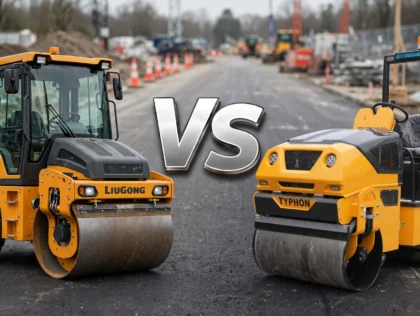
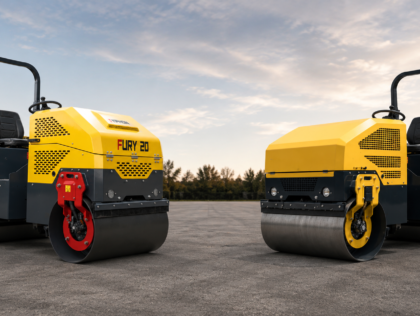
When you ask experts how to choose the best vibratory roller for 2026, compare these 5 features. The TYPHON FURY 20 checks every box. You can see how it stands up against rivals in our TYPHON FURY 20 vs Bomag 2 Ton comparison.
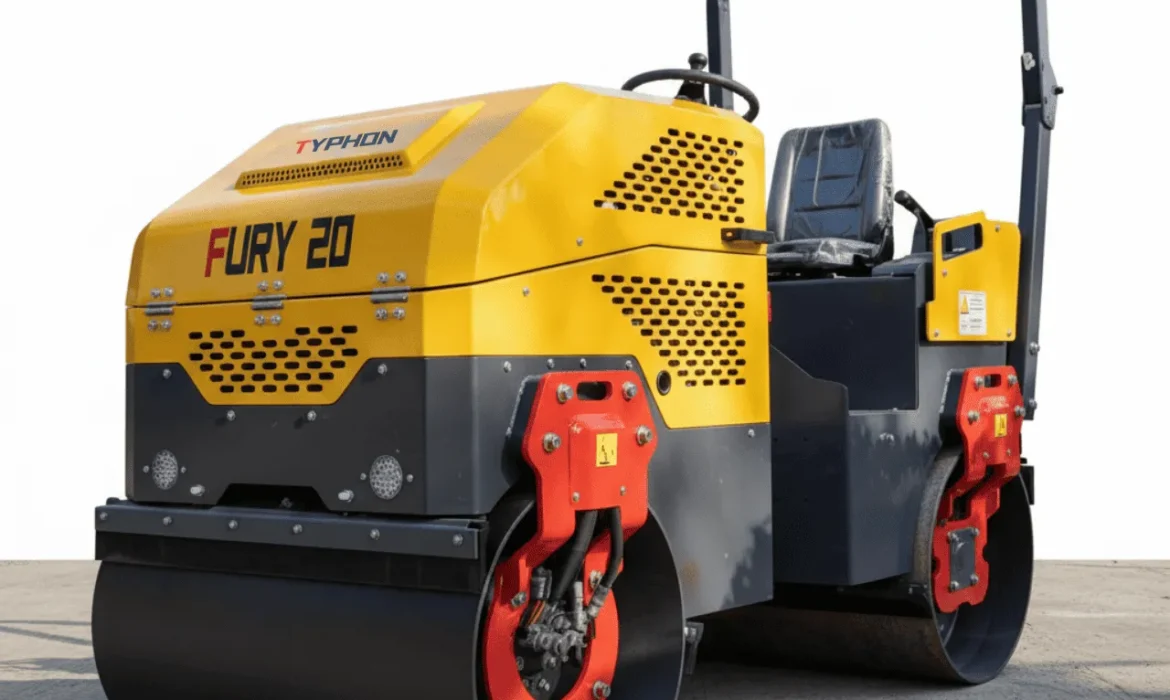
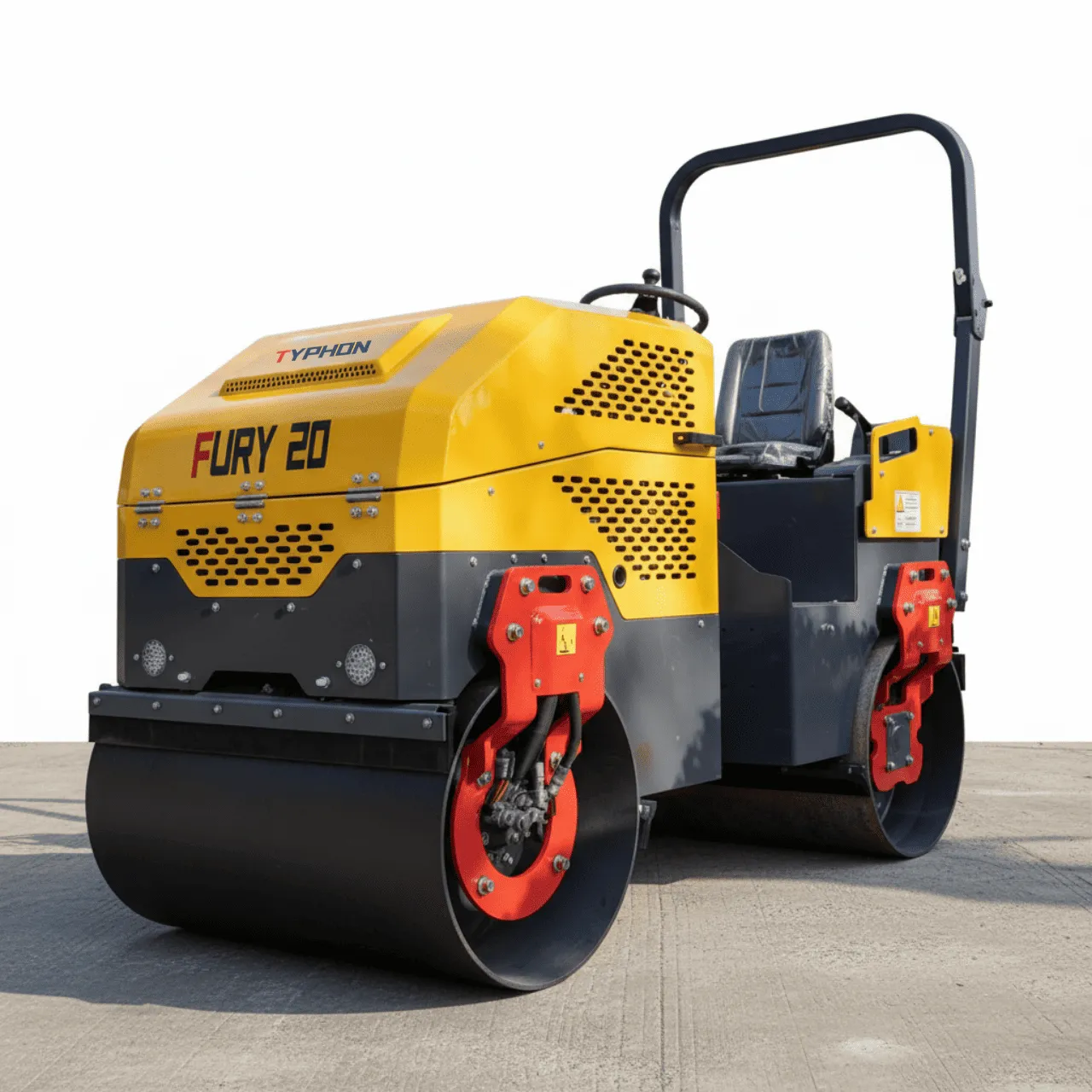
✔ USA built Briggs and Stratton engine.
✔ 20 mm drum thickness.
✔ 30 gallon water tank.
✔ Full hydraulic steering.
✔ Side opening hood.
The TYPHON FURY 20 is the perfect answer to how to choose the best vibratory roller for 2026.
What to avoid in 2026
Part of knowing how to choose the best vibratory roller for 2026 is knowing what to avoid.
- Avoid Chinese engines: They fail more often. Parts are hard to find. Resale value is lower.
- Avoid thin drums under 18 mm: They crack on rocky soil. You pay for reshelling sooner.
- Avoid small water tanks under 25 gallons: You refill more often. You lose compaction time.
- Avoid mechanical steering: It is harder to control near edges. You risk hitting curbs.
- Avoid top cover hoods: They slow down maintenance. You lose jobsite time.
Keep these red flags in mind when learning how to choose the best vibratory roller for 2026.
Real contractor experiences with these features
Contractors who know how to choose the best vibratory roller for 2026 share their stories. A contractor in Texas bought a roller with a Chinese engine. It failed at 400 hours. He spent $800 on repairs. He switched to a USA built engine roller. It ran 1,800 hours with no major issues.
A contractor in Arizona worked on caliche soil. His 18 mm drum cracked after 900 hours. He replaced it with a 20 mm drum. The new drum lasted 1,400 hours. He saved one reshelling. A contractor in Florida used a roller with a 20 gallon water tank. He refilled 4 times per day. He switched to a 30 gallon tank. He refills 2 times per day. He saves 4 minutes per day. Over a year, that is 800 minutes.
A contractor in California tested hydraulic steering and articulated steering. He chose hydraulic. He said it was more precise near curbs. He stopped hitting edges. A contractor in Ohio timed his maintenance. Side hood took 7 minutes. Top cover took 15 minutes. He saved 8 minutes per service. Over 50 services, he saved 400 minutes. His experience perfectly illustrates how to choose the best vibratory roller for 2026 by prioritizing accessibility.
How to test these features before buying
Before you finalize how to choose the best vibratory roller for 2026, visit a dealer. Ask to see the roller. Open the hood. Time yourself. See if you can reach all service points. Check the engine stamp. Confirm the country of origin. Ask for the spec sheet.
Measure the drum thickness. Use a caliper if possible. Confirm the number with the dealer. Fill the water tank. Time how long it takes. Check the spray pattern. Look for even coverage. Test the steering. Turn the wheel. Feel the response. Practice a tight turn. This hands-on approach is the ultimate secret of how to choose the best vibratory roller for 2026.
Final Checklist for How to Choose the Best Vibratory Roller for 2026
Keep this guide on how to choose the best vibratory roller for 2026 handy when talking to dealers.
Engine: USA built, Briggs or Kohler.
Drum thickness: 20 mm on 2 ton models.
Water tank: 30 gallons minimum.
Steering: Full hydraulic.
Hood: Side opening.
Ask the dealer for each spec. Confirm in writing. Test the roller if possible. Compare multiple brands. This is exactly how to choose the best vibratory roller for 2026 without making expensive mistakes.
Why 2026 is a critical year for buying
If you are researching how to choose the best vibratory roller for 2026, understand that EPA rules change in 2026. New emissions standards affect small engines. Many manufacturers will switch to Chinese engines. USA built engines will become harder to find.
TYPHON FURY rollers currently use USA built Briggs engines. Once inventory runs out, these may not be available. If you want a USA-built engine, buy before the end of 2025.
Your next step
Now you know how to choose the best vibratory roller for 2026. Compare the TYPHON FURY 20 against other rollers. Check each of the 5 critical features. Choose the roller that meets all 5. Order before 2026 inventory runs out.
Secure a reliable machine with a genuine USA-built engine, thick 20mm drum, and hydraulic steering before EPA regulations change the market forever.
View the TYPHON Fury Series Today